 Podcasts
Future platforming conversations, right here, right now - Ep 139
Categories: Podcasts , MOT This Week in Testing
Negative testing is redefined as essential for blocking invalid actions and fostering cross-team collaboration, while platform engineering emphasizes self-service infrastructure and simplifying workflows. The episode also addresses AI trends, learning frameworks, community engagement strategies, CV best practices, and the need for cultural shifts in engineering collaboration.
 Podcasts
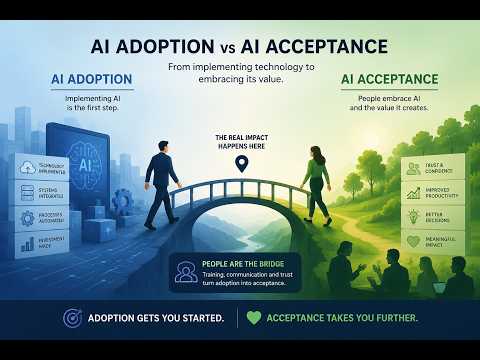
The "AI Chasm" - AI Adoption vs Acceptance
Categories: Podcasts , The Value of Software Testing
AI adoption focuses on user metrics, but true acceptance requires satisfaction and integration with workflows, often hindered by forced use and distrust, while global adoption varies with corporate reliance outpacing public trust. Challenges include ethical risks, environmental costs, and resistance to AI as a tool rather than a replacement, emphasizing the need for human oversight and balanced integration.
 Podcasts
Strategy First: How AI Enters Regulated Medical Labs - Alexis Savkin
Categories: Podcasts , Software Testing Unleashed
AI integration in regulated sectors demands balancing innovation with compliance, addressing challenges like non-deterministic systems and strict frameworks through tools like Bowtie Analysis and mathematical proof of solvability. Strategic planning, cross-disciplinary collaboration, and tailored solutions are critical to align AI with stakeholder needs and regulatory requirements while managing risk.
 Podcasts
Be what you are: Preeti Gupta on experience, rejection, and coming out stronger - ItM Episode 21
Categories: Podcasts , Into The MoTaverse
QA professionals struggle to secure jobs in AI-dominated markets due to rigid ATS systems, requiring strategic skill alignment, portfolio development, and community engagement. The evolving role of QA demands human oversight in AI automation, balancing technical adaptation with soft skills, resilience, and long-term professional growth.
 Podcasts
The Job Your Boss Thinks You Do Is Disappearing
Categories: Podcasts , The Vernon Richard Show
Keith Klein distinguishes between low-cognitive “checking” (automated verification) and high-cognitive “testing” (critical analysis), warning that AI may automate routine checks but cannot replace human-driven exploratory testing or contextual judgment. The discussion emphasizes the need for testers to prioritize strategic thinking, challenge assumptions, and balance AI efficiency with ethical and systemic risks in evolving software practices.
 Podcasts
Valuable Feedback, Fast: Redefining Test Automation with Bas Dijkstra
Categories: Podcasts , BrowserStack Talks
Prioritizing actionable feedback over vanity metrics like code coverage is crucial, as test volume often fails to reflect true quality, while LLM-generated code and tests risk producing misleading outputs. The discussion underscores the need for testers to focus on relevance, user value, and critical thinking, challenging outdated practices and advocating for pragmatic, human-centric testing approaches.
 Podcasts
The AI Illusion: Why Testing Still Needs Humans with Joe Colantonio
Categories: Podcasts , Test Guild
The aging-out of software testing risks losing critical expertise, while AI’s limitations in understanding human context and emotions undermine its reliability in testing. Human-centered evaluation emphasizing empathy, ethical considerations, and nuanced user experiences is essential to ensure software aligns with real-world needs.
 Podcasts
Wenn generative KI gegen die eigenen Werte verstot - Johannes Link
Categories: Podcasts , Richard Seidl Software Testing
Generative AI’s statistical nature risks producing misleading content, exploits non-consensual data, concentrates power among corporate giants, and exacerbates environmental and social harms, while undermining education and eroding public resources. The critique highlights the need for transparency, ethical oversight, and smaller, specialized models to counter corporate dominance and align AI with societal values rather than profit-driven priorities.
 Podcasts
From Vibe Slop to AgentOps, Postman AI, Bug Report to Release Sign Off and More! TGNS187
Categories: Podcasts , Test Guild News Show
Advancements in bug reporting and QA workflows focus on tools like Bugsy, Cypress Schema Validator, and Playwright Step Decorator, alongside AI agents such as Otters AI and Postmans AI Engineer, which automate testing while emphasizing human oversight. Ethical concerns, security risks of AI-generated code, and the push for structured testing practices and training are highlighted to address gaps in testing competence.
 Podcasts
How to Test With A Customer-First Mindset with Pradeep Soundararajan
Categories: Podcasts , How To Test This?
The podcast highlights the need to move beyond automation and scripted testing, stressing critical thinking, user-centricity, and organizational culture in software testing. It advocates redefining testers as customer-focused problem-solvers, emphasizing adaptability, unlearning outdated practices, and prioritizing real-world impact over technical fixation.
Podcasts
TWiQ, camera, action: Vibe mapping high value activities - Ep 138
Categories: Podcasts , MOT This Week in Testing
High-value quality engineering activities require expertise in tasks like exploratory testing and architectural risk reviews, balancing hands-on work with strategic judgment and AI-driven tools. The episode emphasizes context-dependent prioritization, human oversight of automation, and collaborative approaches to prevent errors and align testing with meaningful outcomes.
 Podcasts
How AIs Horseshoe Curve Causes Predictions to Fail Where We Least Expect - with Greg Paskal
Categories: Podcasts , The Value of Software Testing
The podcast examines the transformative impact of technology on testing practices since the 1990s, highlighting AI testing challenges, the hype-driven “gold rush” in AI, and the need for education, collaboration, and humility amid superficial adoption. It emphasizes security risks in AI systems, the critical role of QA validation, and the irreplaceable importance of human oversight and rigorous testing to counter AI limitations and ethical pitfalls.