 Podcasts
Learning from Defects in Software and Life (Alison McGuigan)
Categories: Podcasts , Applause Ready Test Go
It connects leadership, parenthood, and creative practices like crocheting to explore balance, resilience, and systems thinking, using iterative processes and mindfulness to navigate complexity. The podcast advocates for empathy, adaptability, and shared accountability in both personal and professional realms, framing challenges as opportunities for growth through curiosity and structured problem-solving.
 Podcasts
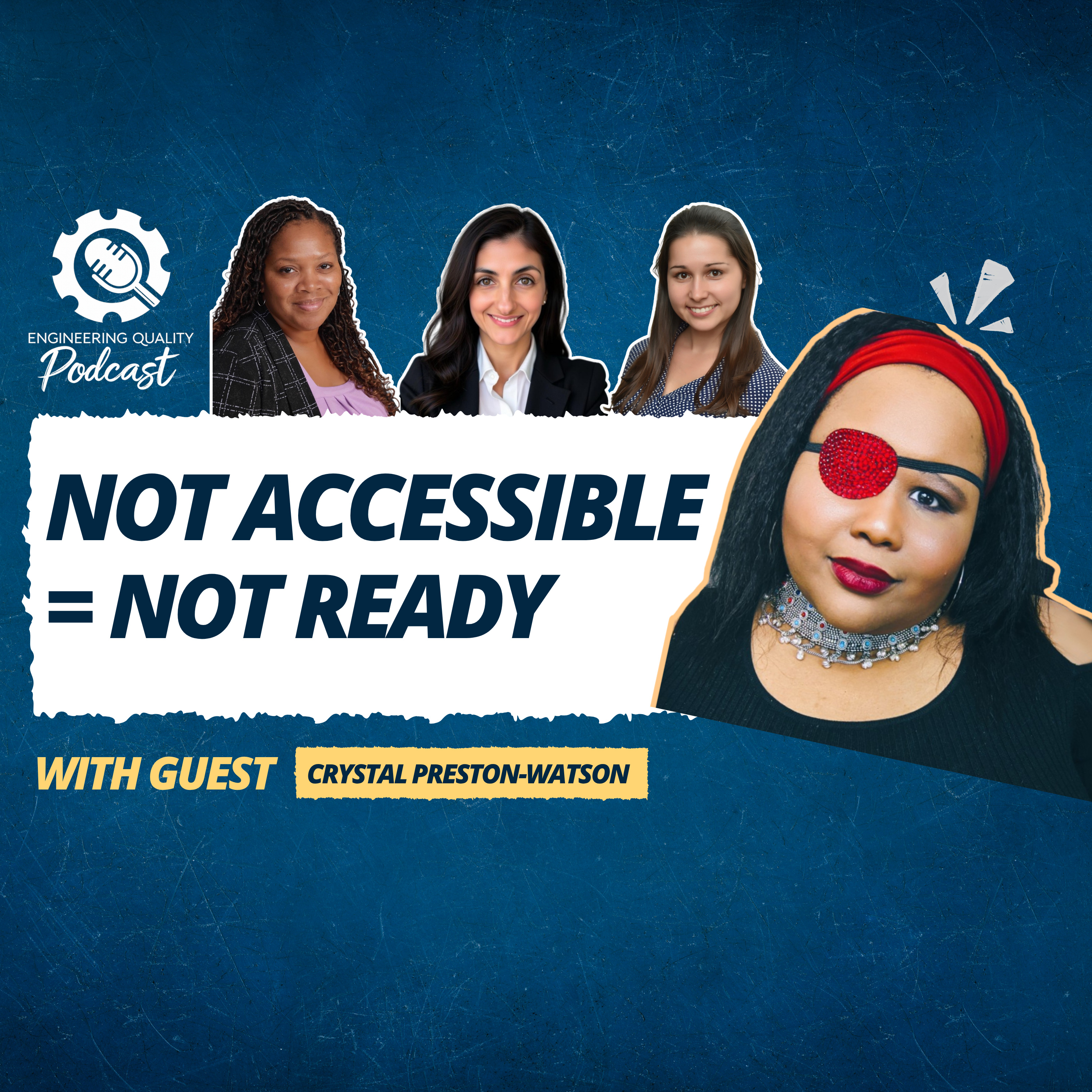
18: Not Accessible = Not Ready
Categories: Podcasts , The Engineering Quality Podcast
Accessibility and inclusive design must be central to digital development, driven by personal experiences and informed by lived expertise, while overcoming organizational resistance and reliance on automated tools. The discussion underscores ethical, economic, and legal imperatives for embedding accessibility, advocating for human-centered solutions over speculative technologies.
 Podcasts
You're Not Ready For Quality Engineering with Callum Akehurst-Ryan
Categories: Podcasts , Quality Talks
The text critiques outdated testing practices, communication gaps, and rigid terminology, urging a cultural shift toward collaboration, strategic advising, and modern engineering alignment. It emphasizes testers evolving into problem-solvers with cross-functional expertise, leveraging AI while prioritizing adaptability, humility, and value-driven contributions.
 Podcasts
Praxisnah sicher entwickeln mit IEC 62443-4-1 - Holger Santelmann
Categories: Podcasts , Richard Seidl Software Testing
Secure development practices aligned with IEC 62443 and the Cyber Resilience Act emphasize traceability, secure design, SBOMs, and rigorous testing to ensure compliance and resilience. Collaboration, shift-left security, standardized workflows, and continuous training are critical for integrating security into development while addressing cultural and operational challenges.
 Podcasts
Pre-Season 4 Bonus
Categories: Podcasts , Quality Blether
A quality engineering playbook serves as an adaptable framework combining principles, tools, and real-world implementations, evolved over a decade to improve QA across diverse teams. The discussion highlights community-driven conferences, automation of repetitive tasks, and collaborative innovation to advance testing practices and team motivation.
 Podcasts
MoTaCon 24/7/404 - Ep 131
Categories: Podcasts , MOT This Week in Testing
MottoCon evolved from a testing-focused conference to a community-driven quality engineering platform, introducing the SWEC certification and emphasizing inclusive collaboration across tech disciplines like AI and security. The event features interactive workshops, cross-disciplinary talks, and tools like “Moments” to foster professional growth, while expanding into engineering management and local chapters to strengthen community engagement.
 Podcasts
How to Test With Playwright CLI & AI - Lucas Smit
Categories: Podcasts , How To Test This?
The text discusses modern QA strategies leveraging AI and tools like Playwright, emphasizing automation, risk management, and AI agent compatibility for efficient, reliable testing. It highlights the evolving QA role in balancing AI-driven automation with human oversight, foundational skills, and collaboration across teams to ensure accuracy and security in increasingly automated workflows.
 Podcasts
Unlocking the True Value of Test Automation (With Greg Paskal)
Categories: Podcasts , The Value of Software Testing
Emphasizing test automation’s value and communication with stakeholders, the text critiques rigid “shift-left” practices, expands automation to IoT and monitoring, and stresses human analysis over simplistic tools. It highlights challenges like over-reliance on AI, flawed automation practices, and the need for balanced teams, human judgment, and ethical integration of technology in testing.
 Podcasts
Episode 9: AI, Testing and DORA with Lisa Crispin
Categories: Podcasts , BeyondQuality
AI-driven tools are reshaping software testing by demanding collaborative, adaptive practices and human oversight to address risks like job displacement and “cognitive debt.” The discussion emphasizes embedding testing throughout development, validating AI outputs, and prioritizing user needs to maintain quality amid non-deterministic AI systems.
 Podcasts
From Nokia to iPhone: What Pen Testers Learned - Bartosz Czernic-Goawski
Categories: Podcasts , Software Testing Unleashed
Mobile security evolved from basic devices with minimal protections to complex ecosystems facing advanced threats, highlighting vulnerabilities in early smartphones, app ecosystems, and user privacy risks. The discussion covers platform-specific risks, social engineering tactics, data exploitation by corporations, and regulatory efforts to balance security with usability and accessibility.
 Podcasts
AI Testing Is Breaking Your Pipeline. Fix Quality Before It's Too Late with Eric Minick
Categories: Podcasts , Test Guild
AI-driven coding accelerates development but risks quality, with 95% of teams using AI weekly yet testing and pipeline tools lagging in integration, causing 22% of deployments to face incidents. Balancing speed with rigor requires better AI tool alignment, test-first practices, and robust CI/CD pipelines to mitigate instability and manual workload.
 Podcasts
Quality as a curious system - Into the MoTaverse - Episode 13
Categories: Podcasts , Into The MoTaverse
Adaptability and creativity are central to evolving QA/testing roles, emphasizing systemic thinking, AI integration, and leadership that prioritizes psychological safety and collaboration. The discussion critiques AI’s limitations in originality while advocating for its strategic use, alongside reimagining hiring to value problem-solving over rote skills and fostering intentional growth through mindfulness and lifelong learning.